Now selling · HadapsarAstranaA DBT ventureThe GroupMivan · IGBC PlatinumBuilt the harder wayFor buyers abroadPune East, from anywhereExperience CentreFreedom High Street
Lifestyle & Wellness · Pune East
Life, beautifully restored.
Every amenity is designed with a purpose — to help you rest, recover and live well.
Research on restorative places points to four conditions that help the mind recover. We made them our brief.
01Being away
A boundary the mind believes
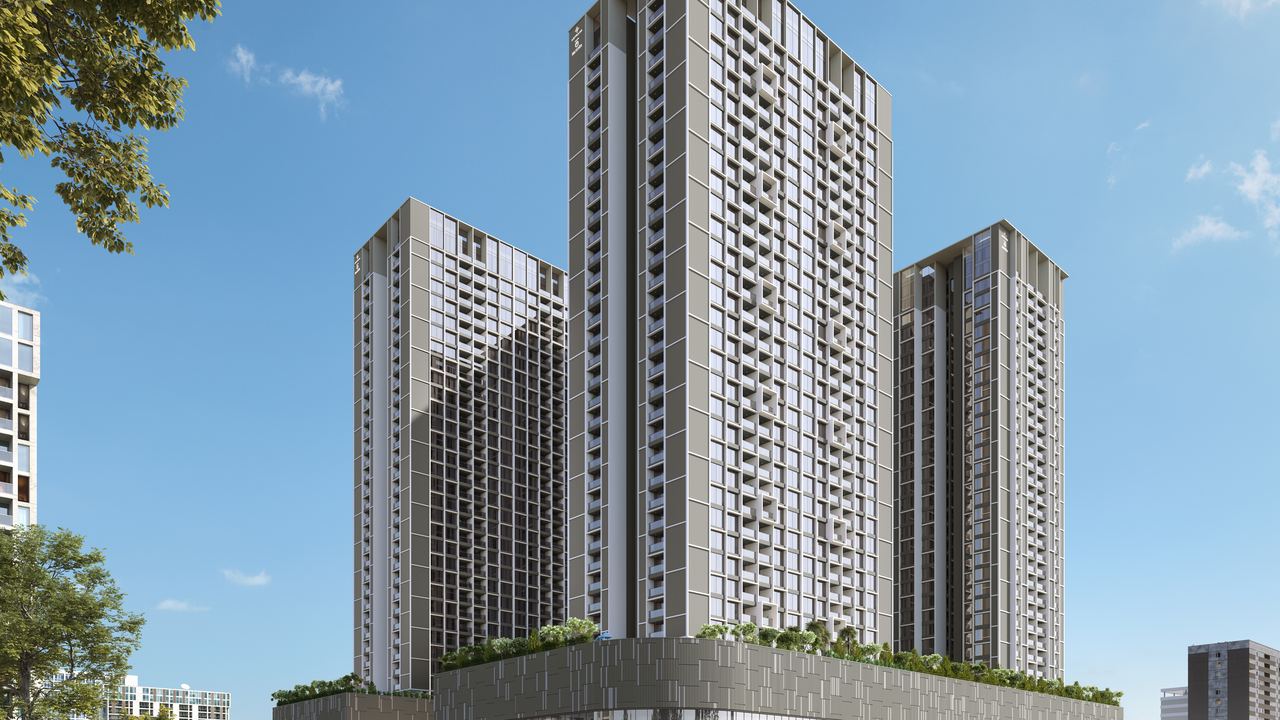
Restoration begins only when the mind accepts it has left. A gate is not enough — the podium sits above the road, so the traffic you just drove through is out of sight and largely out of earshot. Thirty seconds from the lift, your nervous system has already registered the change.
Podium raised above street level
65% of the parcel kept open
Landscape screens the boundary
02Soft fascination
Attention that refills instead of drains
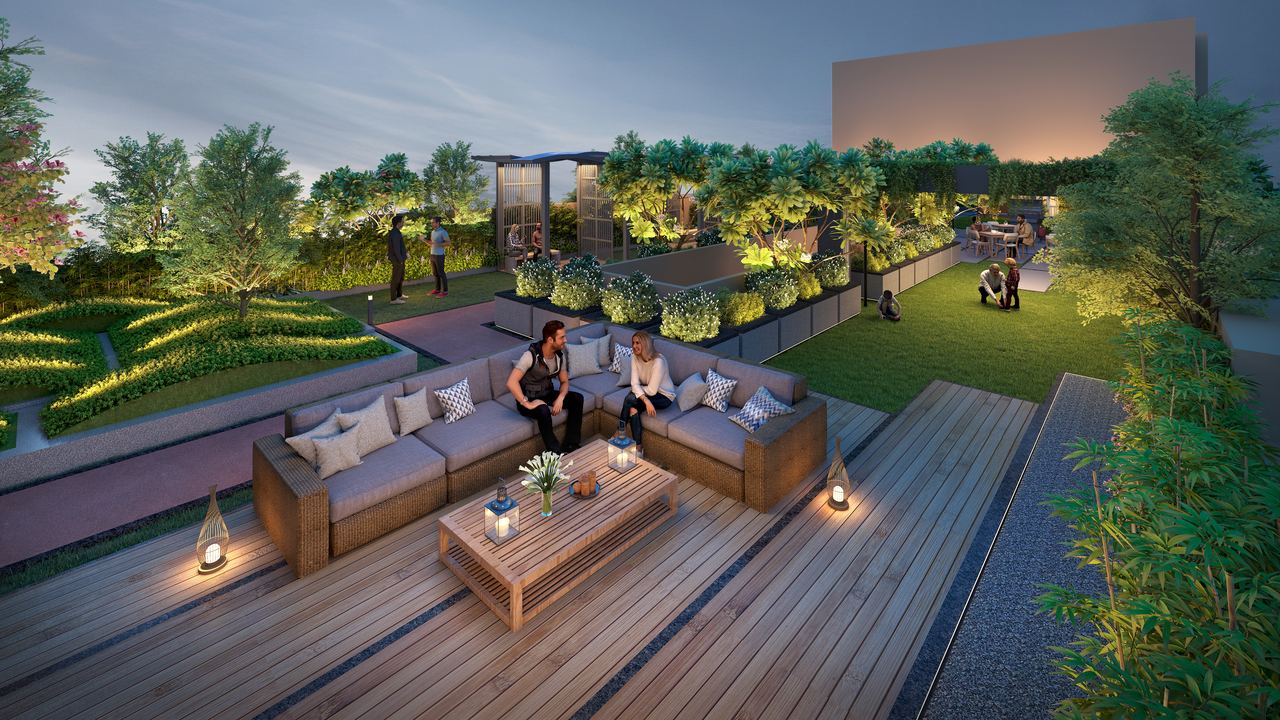
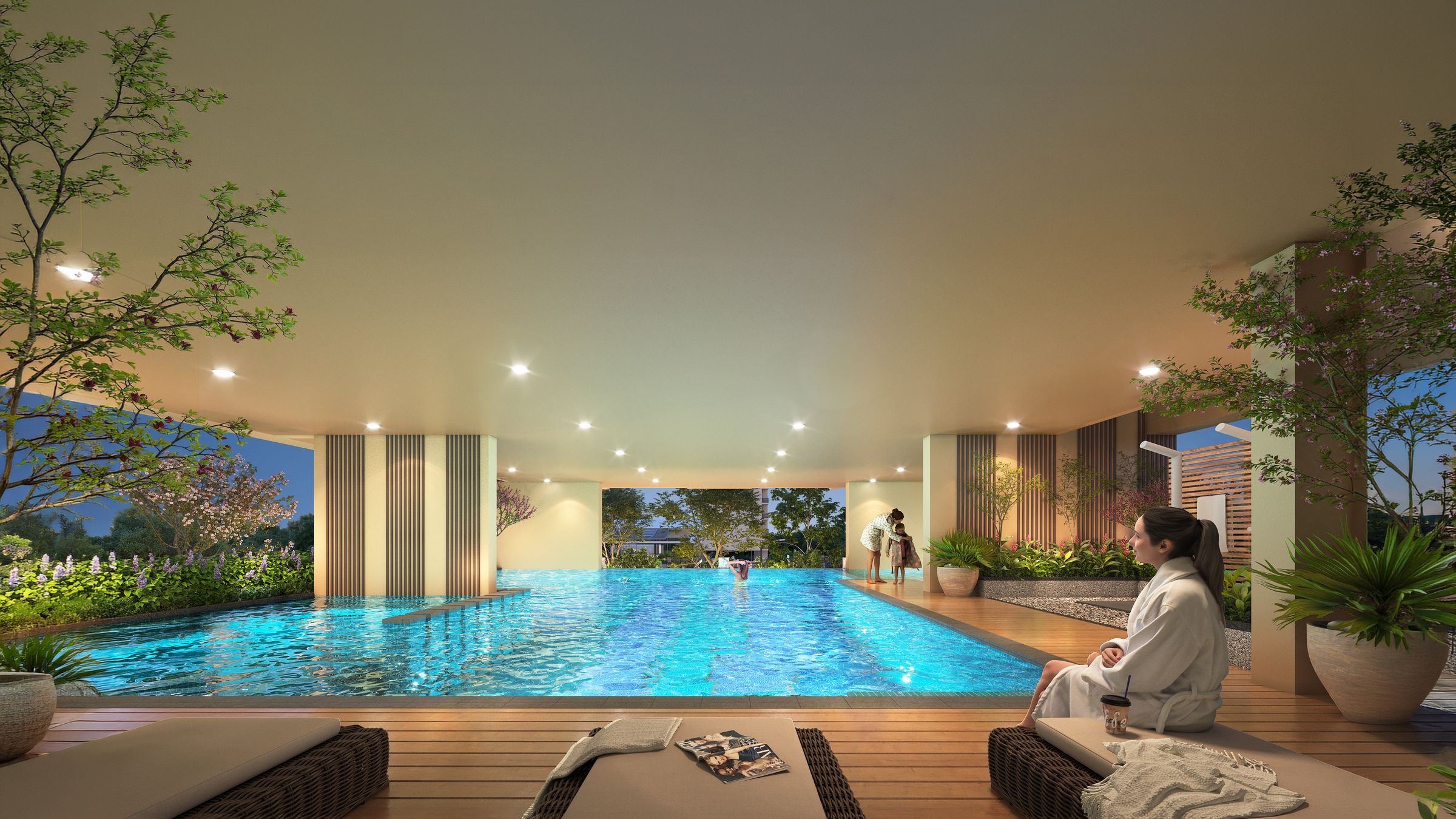
Directed attention — the kind a spreadsheet demands — is a finite resource, and it depletes. Moving water, leaves shifting, a fire in a barbeque counter: these hold attention effortlessly, which is precisely what lets the depleted, effortful kind recover. This is Attention Restoration Theory, and it is why a pool deck outperforms a screen for rest.
Water: pool, kids pool, water bodies
300+ trees moving in the wind
Gravel-bed sculpture court
03Extent
Somewhere that feels bigger than it is
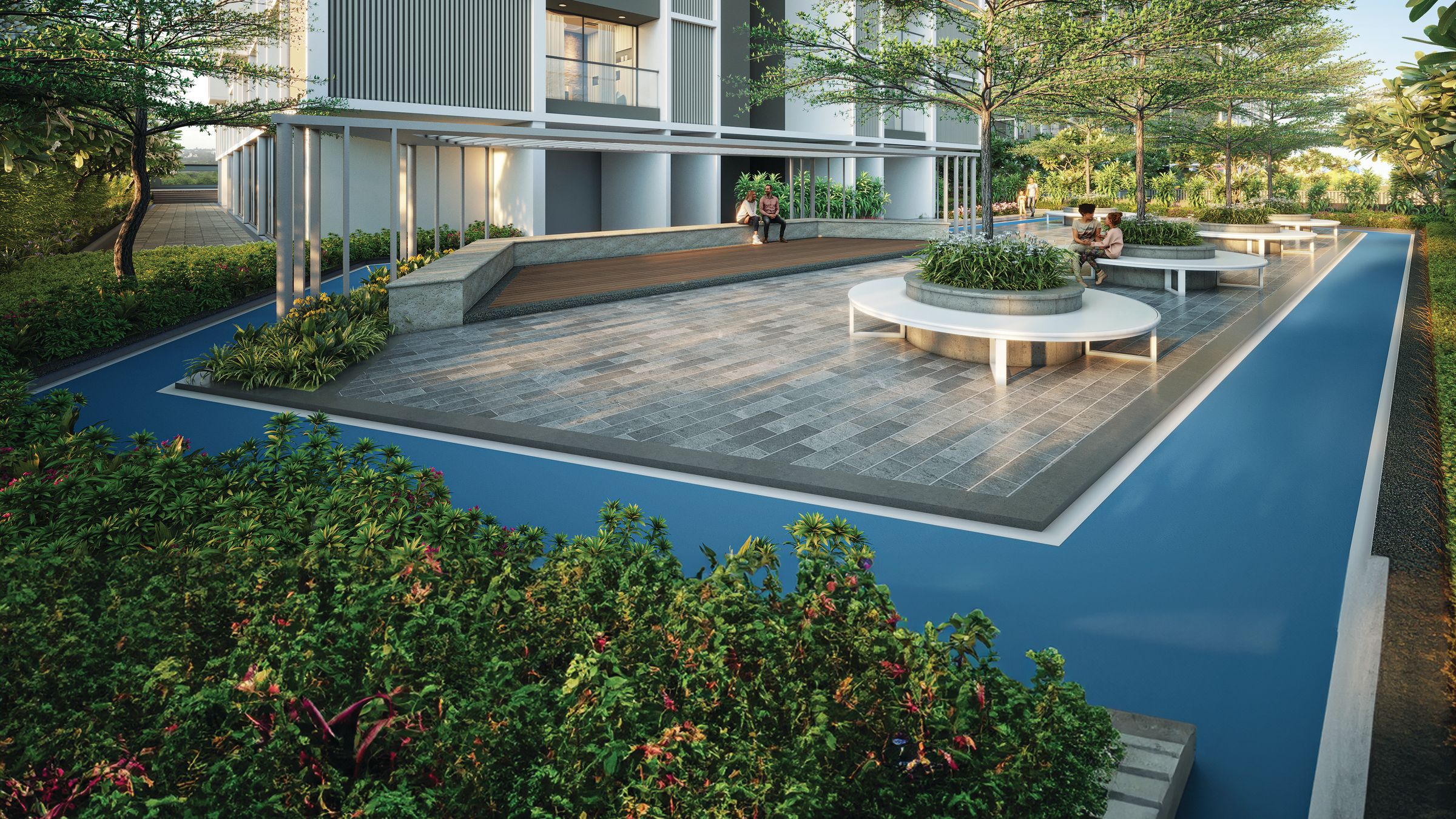
A restorative place must feel like a world you can wander into, not a courtyard you exhaust in one glance. The jogging track loops rather than ends; the amphitheatre, lawn, deck and pet park each reveal themselves separately. Six-and-a-half acres, composed so no single viewpoint gives all of it away.
A looping jogging track, not a strip
Zones revealed in sequence
6.5 acres of composed ground
04Compatibility
A place for what you actually need
Restoration fails when a space fights your intention. The stressed parent, the resident on a call, the teenager with energy to burn and the grandparent who wants stillness need different things at the same hour. So we built for each — separately — rather than one lawn asked to serve everybody.
Buildings do not cure anything. The research on restorative environments describes tendencies across populations, not promises to individuals — and a pool deck is no substitute for medical care, or for sleep, or for the people you love. What good design can honestly do is remove a handful of daily frictions and give the recovery you are already capable of somewhere to happen. That is the claim we make, and we would rather make it accurately than loudly.